Plan Before You Commit: What to Work Out Before an Irreversible Step
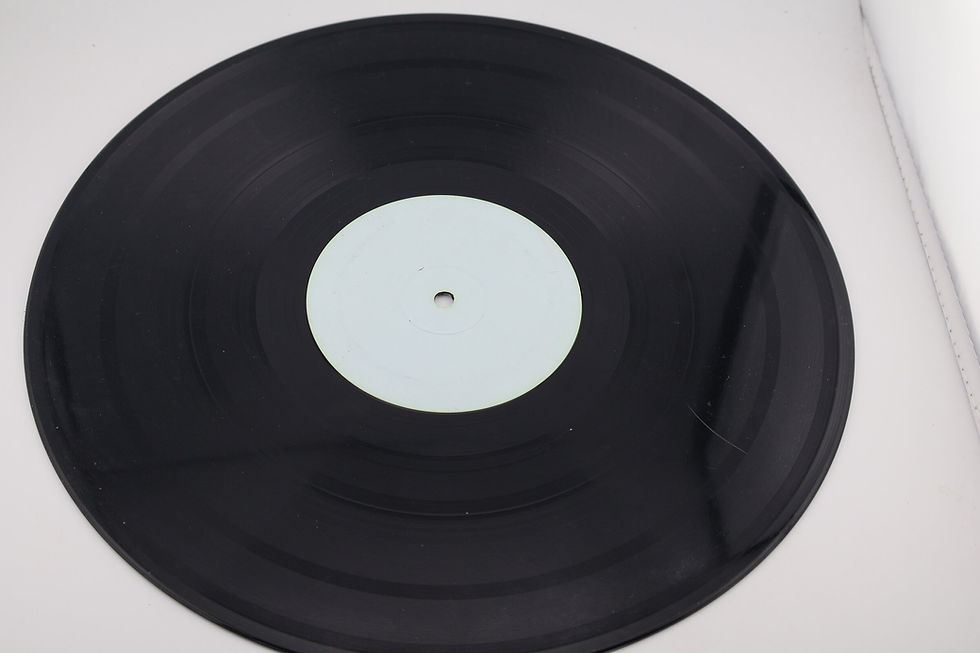
You've chosen a record for REIMAGINE.
You've taken time to understand the material in front of you.
And now you have an idea.
This is often the point where making feels close enough to begin. You can picture the finished object, the tools are nearby, and it is tempting to move straight from idea to action.
But before you make a permanent change, there is another useful step.
Turn the idea into a plan.
Planning does not have to mean pages of drawings, complicated calculations or removing every uncertainty before you begin. It means working out enough about the project to understand what you are trying to achieve, what you actually have, what you still need to learn and where the important decisions will happen.
Start with the purpose
Before thinking too much about decoration or finishing details, describe what you are actually trying to make.
Keep it simple.
What am I making?
What should it do?
Those two questions begin to turn an idea into a project brief.
If the object is intended to have a function, say what that function is. If preserving part of the original record matters to the idea, record that too.
A clear purpose gives later decisions something to answer to.
Instead of asking only:
Do I like this?
you can eventually ask:
Did this do what I intended it to do?
Decide what success would look like
It is easier to judge a finished project if you have thought about success before making it.
Success will not mean exactly the same thing for every project.
It might involve function.
It might involve fit.
It might involve keeping an original feature visible.
It might involve the finished object looking deliberate rather than accidental.
The useful question is:
How will I know whether this project worked as intended?
Write the answer down before making.
You can change your thinking later if the project teaches you something new. But having a starting definition gives you something meaningful to compare the result against.
Sketch before you commit
You do not need to be good at drawing to make a useful workshop sketch.
A sketch can simply show where things might go, what should remain visible and how different parts relate to one another.
It is a place to think.
And paper is a much easier place to discover that an idea needs changing than a record you have already altered.
Your first sketch does not need to become the final design.
Its job is to make the idea visible enough to question.
Work with what you actually have
Planning becomes more useful when it is based on the real materials and components in front of you rather than assumptions about what ought to fit.
Look at what you already have.
What will become part of the finished object?
What equipment might the project require?
Is there anything you still need before you can sensibly continue?
Where dimensions matter, measure the actual components you intend to use rather than assuming another component, another project or a remembered measurement will be identical.
A small difference can become important when a later change cannot easily be undone.
The purpose of measuring here is not to create a universal specification.
It is to understand your actual project.
Find the irreversible steps
Now look through the idea and ask:
Which decisions will be difficult or impossible to undo?
Depending on the project, that might include cutting, drilling, removing a label, using a permanent adhesive, painting, heating or reshaping.
These are not instructions to carry out those processes.
They are planning markers.
Circle them on your sketch or write them into your project notes.
An irreversible step deserves more attention than a reversible one because after it happens, returning to the starting point may no longer be possible.
Before reaching one, you should know what still needs to be confirmed for the particular project — whether that concerns measurement, testing, how the work will be secured, the equipment involved or relevant safety requirements.
If an important question is still open, keep it open rather than disguising uncertainty as confidence.
Turn uncertainty into a question
Not every uncertainty needs a complete prototype.
Sometimes you need a smaller test that answers one specific question.
Ask:
What do I need to find out before I commit?
That question might concern fit, sequence, an unfamiliar process or another assumption on which the project depends.
The important point is to know what the test is supposed to tell you.
It is not automatic proof that a method is safe, repeatable or suitable for every other record or project.
If the answer matters beyond the particular test you performed, the evidence has to be strong enough for that wider conclusion.
Put the work in order
A project is not only a collection of tasks.
The order matters.
Something that would have been easy to check at the beginning may become difficult after a permanent operation.
So write down the likely sequence before you begin.
You might need to inspect, prepare, measure, mark or test before any permanent work takes place. Later stages may involve assembly, checking function, finishing, inspection and documentation.
The exact sequence depends on the project.
The useful habit is to ask:
What needs to happen before something else becomes difficult to change?
Ask what could go wrong
Planning for failure does not mean expecting the project to fail.
It means respecting uncertainty.
Ask:
What is most likely to go wrong?
Then ask:
Is there something I can check, test or change before that matters?
You may discover that a measurement needs confirming.
You may realise that an assumption needs testing.
You may decide that the order of work should change.
Or you may discover that you do not yet know enough to continue.
Stopping at that point is still useful progress.
You have found the question before the irreversible step rather than afterwards.
Decide what you want to record
Before making begins, decide what information might be useful later.
That could include important measurements, component information, photographs, observations, questions or unexpected results.
You do not need to document every second of a project.
Record what will help you understand what happened.
If something fails, record that too.
A useful workshop record does more than show the finished object. It helps preserve the decisions and observations that led to it.
Let the plan change
Planning does not mean locking yourself into the first idea.
The material may suggest something better.
A measurement may challenge an assumption.
A test may answer one question and reveal another.
When evidence gives you a reason to change the plan, change it.
The useful habit is to know why you changed it.
A plan should guide the project, not trap it.
Try the pre-making exercise
Choose one straightforward idea.
Do not make it yet.
1. Write down what you are making and what it should do.
2. Decide how you would recognise success.
3. Sketch the idea.
4. Note the actual record, materials and components you intend to use.
5. Measure anything important to the fit or design.
6. Identify the steps that would be irreversible.
7. Put the likely work into an order.
8. Identify one uncertainty that should be answered through testing.
9. Decide what measurements, photographs or observations will be worth recording.
Then stop.
Look at the plan and ask one final question:
Do I know enough to take the next step responsibly, or is there still something I need to find out first?
A good plan cannot promise that everything will work.
What it can do is make your decisions more visible.
And if something later behaves differently from what you expected, you will have a much better starting point for understanding why.
Comments