PLAY → PRESERVE → REIMAGINE: Should This Record Actually Be Upcycled?
Updated: Sep 1
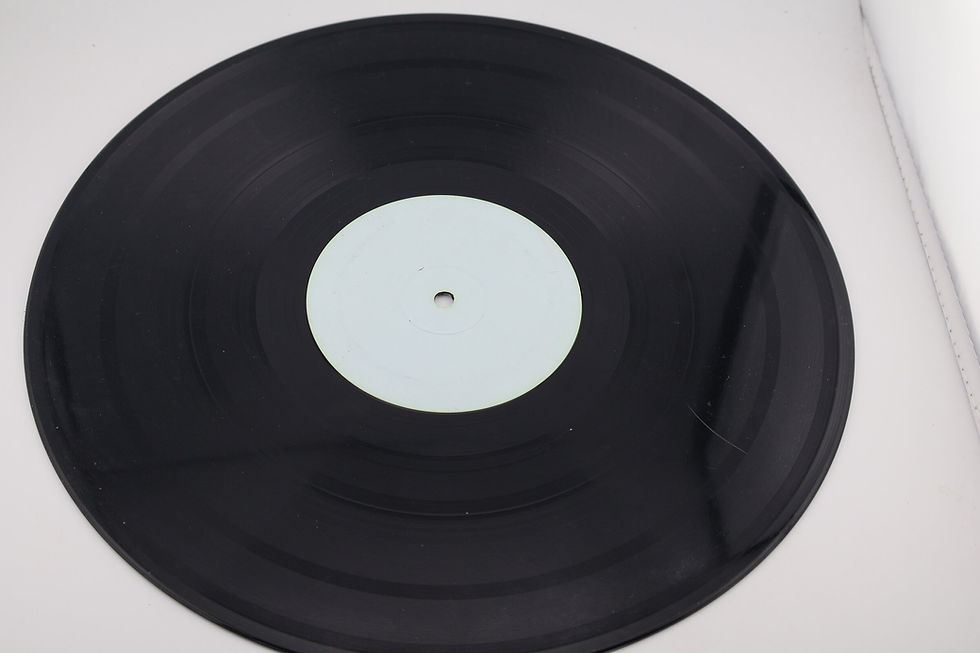
An old vinyl record can be an inviting thing to make with.
It already has a shape. A surface. A label. Grooves that catch the light. Perhaps some wear, a damaged sleeve or years of history written into its condition.
It is easy to look at all of that and immediately ask: What could I make from this?
At Second Spin Creations, there is another question we want to ask first: Should I change this record at all?
That pause matters.
A record should not become craft material simply because it is old, inexpensive, scratched or sitting unused in a box. Some records still have a perfectly good job to do as records. Others deserve a closer look before anything permanent happens to them.
So before a record reaches the workbench, we use a simple way of thinking about what should happen next:
PLAY → PRESERVE → REIMAGINE.
PLAY
Start with the original purpose.
Can the record still reasonably continue its life as a record?
A mark on the surface does not automatically answer that question. Nor does an untidy sleeve, an old label or the fact that somebody no longer wants it.
If the record still has a useful life in its original form, transformation may not be the most appropriate next step.
It can be played. Passed on. Given away. Sold. Donated. Put into the hands of somebody who will enjoy it.
Upcycling does not have to mean altering everything we find.
Sometimes the right creative decision is to leave the object doing what it already does.
PRESERVE
Some records make you stop.
Perhaps the pressing seems unusual. The vinyl is coloured. The sleeve is distinctive. The copy is signed, numbered or promotional. Perhaps there is something unfamiliar about the label, catalogue information or markings around the runout.
None of those things automatically proves that a record is rare or valuable.
They are reasons to investigate.
This is the PRESERVE part of the decision: not necessarily a declaration that something belongs in a museum or collection, but a recognition that you do not yet know enough to make an irreversible change.
That uncertainty is useful information.
Look at the artist and title. Read the label. Note the catalogue number. Examine the sleeve separately from the record. Where relevant, photograph identifying details before changing anything.
And if something still makes you wonder, put the record aside.
Research first.
There will be another damaged record.
REIMAGINE
Then there are records whose original life appears to have reached a sensible end.
They may be badly scratched, damaged, warped beyond practical playback or simply unwanted after their condition and significance have been considered.
That is where REIMAGINE begins.
But even here, there is another important distinction: unplayable does not automatically mean suitable for every project.
A crack, chip, damaged centre hole, severe distortion or uncertain material can affect what makes sense next.
The purpose is not to squeeze a project out of every record. It is to understand the particular object in front of you and decide whether transformation is an appropriate next chapter for that object.
That might lead to a clock, a piece of artwork or something completely different.
It might also lead back to the holding pile while you learn a little more.
Both outcomes are valid.
Do not let appearance make the decision for you
Old does not automatically mean valuable.
But old does not automatically mean worthless either.
Coloured vinyl does not automatically mean rare. A damaged sleeve does not tell you everything about the record inside it. A cheap purchase price does not establish what the record is worth to somebody else.
And monetary value is not the only kind of value.
A record may have historical, cultural or sentimental significance. If it belongs to somebody else, its personal story can matter just as much as its condition.
That is why one of the most useful workshop habits is simply learning to pause.
Before cutting, drilling, painting, heating, gluing or otherwise making a permanent alteration, give yourself enough time to understand what you are changing.
The Second Spin record check
Before a record moves into a creative project, ask:
Can it still reasonably continue its life as a playable record?
Is there anything unusual, collectable or historically interesting that I should investigate first?
Does it carry sentimental significance?
Is its physical condition appropriate for the project I have in mind?
Am I comfortable making the change permanent?
You will not always know every answer immediately.
That is not a problem.
“I’m not sure yet” is a perfectly useful workshop conclusion.
Put the record aside. Photograph what matters. Make a note. Research it when you have the right information.
The important thing is not to turn uncertainty into certainty simply because you are eager to start making.
Upcycling begins before the tools come out
The creative part of vinyl upcycling is not only what happens after the first cut.
It also lies in looking closely enough to recognise what you already have.
One record may still want to be played.
Another may deserve to be preserved.
Another may have reached the point where transformation makes sense.
That is the thinking behind PLAY → PRESERVE → REIMAGINE.
Before asking, What can I make from this?
Ask: What do I have — and what deserves to happen to it next?

Comments